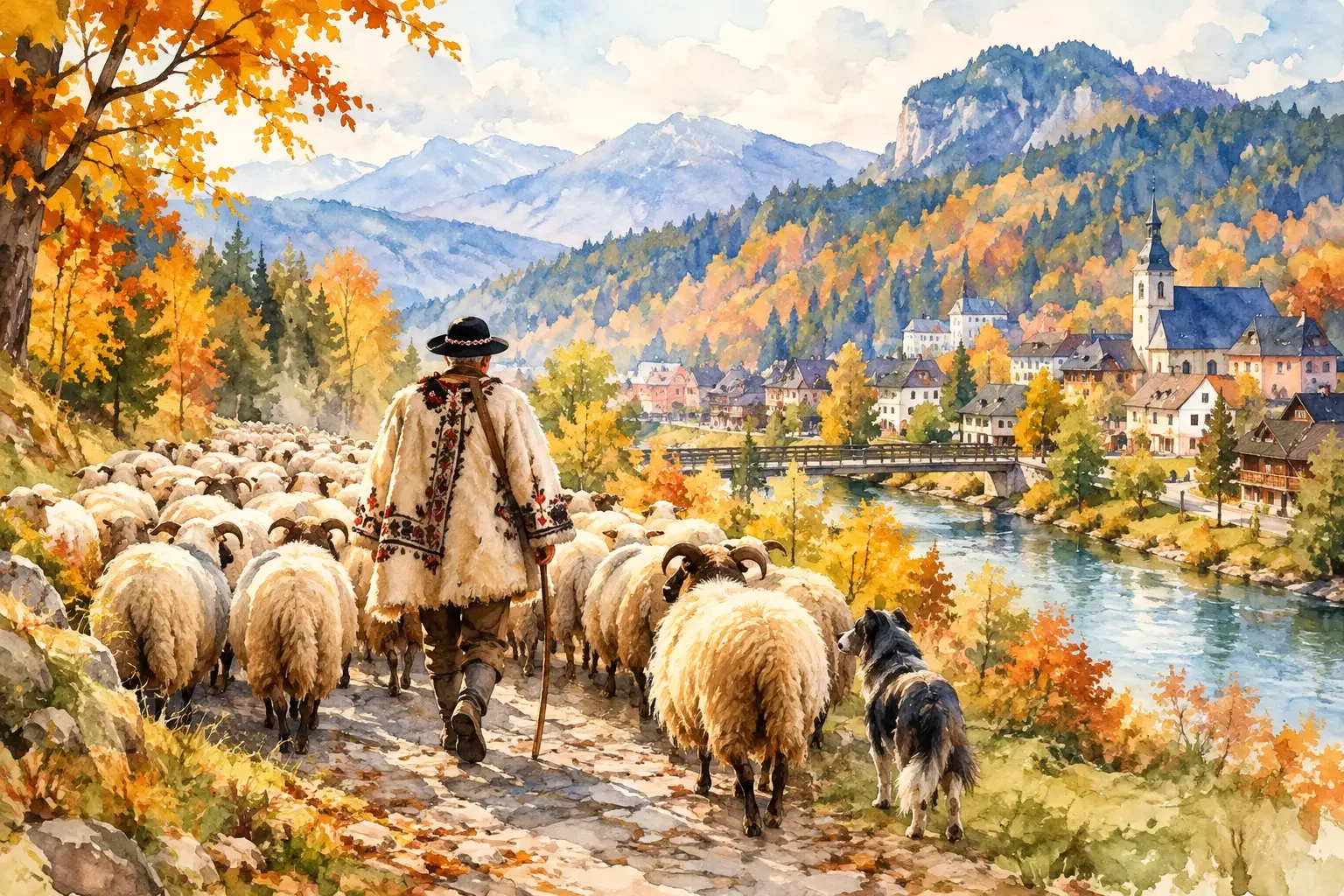
The sound of sheep bells, flocks passing through the streets, and locals and visitors pausing together along the route – the Great Autumn Redyk in Szczawnica is one of those events you don't just watch from in front of a stage. It is a living part of the Pieniny shepherding tradition, on show right in the centre of this spa town. It's worth coming not only for regional flavours or photos with the sheep, but above all to experience the local rhythm, which on this day really is set by the path of the flock.
What is the Great Autumn Redyk in Szczawnica?
A redyk is the traditional driving of sheep down from the high mountain pastures (known locally as hale) at the end of the grazing season. In Carpathian culture it was never simply a practical return of the animals from the mountains. It marked the close of an intense period of work for the bacowie (head shepherds), juhasi (shepherds) and flock owners, and it was also a gathering of the whole shepherding community.
The autumn edition of the event is a reminder that the Pieniny are not just hiking trails, rafting on the Dunajec and strolls around the spa. Behind the tourist attractions, the trades, customs and farms that shape the region's identity are still very much alive. The procession of the flock lets you see this tradition in motion, rather than only in a museum display.
The programme can vary from year to year. Alongside the redyk itself, the organisers may lay on regional music, craft demonstrations, a local produce fair, cheese tastings, children's workshops or extra performances. The highlight, however, is always the sheep and shepherds walking through Szczawnica. That is what draws both people who have known the tradition for years and tourists visiting the Pieniny for the first time.
Why does the redyk take place in autumn?
Grazing on mountain pastures follows its own natural calendar. In spring the sheep go out to the pastures, and when the season ends and mountain conditions no longer allow them to graze for longer, they return closer to the farms. The autumn redyk is therefore tied to the real rhythm of work, the weather and care for the animals.
For visitors, this also gives the event a distinctive atmosphere. At this time of year Szczawnica usually feels less like a summer resort and more like a mountain town: mornings can be chilly, the weather can change quickly, and along the route you'll see more people in jackets than in holiday clothes. That's not a drawback but part of the character of the day. Come well prepared and you can spend a few hours outdoors, combining the redyk with a walk around town or a short trip into the Pieniny.
How to plan your visit
For an event held in the town's streets, up-to-date practical information is what matters most. The date, start time, exact route of the procession, location of the side events and any traffic changes may differ from one year to the next. Don't base your trip on an account from a few years ago, even if the programme sounds familiar.
Before you set off, check above all the organiser's announcement and the current event listing. Look for details of the time, meeting point or best viewing spots, car parks, how to get there and any rules for attending. On Warto przyjść you can use the map view and the date and location filters to combine the redyk with other attractions taking place in Szczawnica on the same weekend.
If you're coming by car, allow extra time. On the day of a big event, popular car parks may fill up early, and stretches of road on the flock's route may be harder to get through for a while. Those staying overnight in Szczawnica often have it easier, as they can walk to the centre. On a day trip, it's best not to plan on arriving exactly at the start time.
What to wear and what genuinely comes in handy
You don't need full mountain gear, but comfortable, closed shoes are a more sensible choice than light footwear with thin soles. Layered clothing, a waterproof jacket and something warmer for the children will also be useful, even if the morning looks sunny.
It's a good idea to bring water, a charged phone and some cash. Some regional stallholders may take card payments, but don't count on it. If you plan to buy oscypek (smoked sheep's cheese), bundz (fresh sheep's cheese), handicrafts or local preserves, bring a bag that will hold your purchases without them getting squashed as you walk around.
Families with children and people with reduced mobility
For children, the sheep procession itself is often far more exciting than a long stage programme. It's worth finding a spot early where your little one will have a good view of the route without standing right at the kerb. The crowd, the sound of the bells and being close to the animals can be thrilling, but some children may also find it overwhelming.
A pushchair or mobility aid should cope well on the paved sections in town, but expect heavier foot traffic. It's best to check in advance whether the organiser has set aside areas that are more convenient for families, older visitors or wheelchair users. If there's no such information, arrive early and choose a quieter viewing spot.
How to watch the redyk with respect for the animals and shepherds
A redyk is not a parade where the sheep are there to pose for photos. It's a procession of animals led by people doing a real job. The best thing spectators can do is keep the route clear, not step in among the animals, not reach out to the flock and not use flash at close range.
If you're bringing a dog, check the rules on animals at the event beforehand. Even a calm dog may react to the crowd, the noise and the sheep, and its presence can cause the flock unnecessary stress. The safety of the animals, the shepherds and the spectators matters more than getting as close to the route as possible.
Taking photos is a natural part of the day, but it's worth keeping a few simple rules in mind. Don't block the way, don't stop the shepherds while they are driving the flock and don't encourage children to approach the sheep. You can take a great shot from the side, keeping a few steps back. That way the redyk stays enjoyable for everyone standing behind you, too.
Regional flavours, at an unhurried pace
Shepherding events are a good opportunity to buy directly from local producers and ask where the products come from. Oscypek, bundz and bryndza (a salty, spreadable sheep's cheese) differ in taste, degree of smoking and use in the kitchen. You don't need to know all the names or how they're made – just ask the stallholder what they recommend eating straight away and what is worth taking home.
Give yourself time for a chat, too. A local fair doesn't work like a quick online shop, and the people selling their goods are often the best ones to explain how the cheeses, woollen products or handicrafts are made. It's this contact with people that sets an event like this apart from anonymous shopping, and it means the money stays in the region.
What to check just before you go
A day or two before your planned visit, confirm four things: the current start time, the route of the redyk, the weather forecast, and how to get there and park. It's also worth checking whether entry to the event is free and whether any of the side attractions require booking or a separate fee.
If you're travelling from far away, don't build your whole day around a single procession time. Szczawnica has room for a leisurely stroll, a meal and a rest, and the autumn weather may prompt a change of plans. Leave yourself some slack rather than trying to tick everything off in a rush.
The Great Autumn Redyk in Szczawnica is best enjoyed without the pressure of getting the perfect shot or sticking to a tight schedule. Arrive a little early, find a safe spot along the route, listen to the bells and let the simple return of the sheep from the mountain pastures become a good reason to get to know the Pieniny and the people who live there.